Field notes: the year the registry asked why our numbers went up
The email came in on a Tuesday, three lines, no softening: Please explain increase in above-ground biomass estimate for the reporting period in the absence of any harvest or thinning activity recorded in the project log.
My first read of it was defensive. My second read was worse, because I started running through the ways a biomass number goes up without anybody cutting a tree, and most of the ones I could think of on short notice were mistakes. A dropped plot. A boundary that shifted between surveys. A unit conversion that snuck a factor of ten into the wrong column. So before I wrote back a single word, I spent two days checking myself before I'd check anything else.
The field crew tally sheets from the prior cycle matched the ones on file. Plot count was the same, the strata hadn't moved, the project boundary hadn't been redrawn. The number itself was correct. It was just bigger than the reviewer expected, and a correct-but-surprising number is a different kind of problem than a paperwork error, one that takes longer to explain and rewards the explaining.
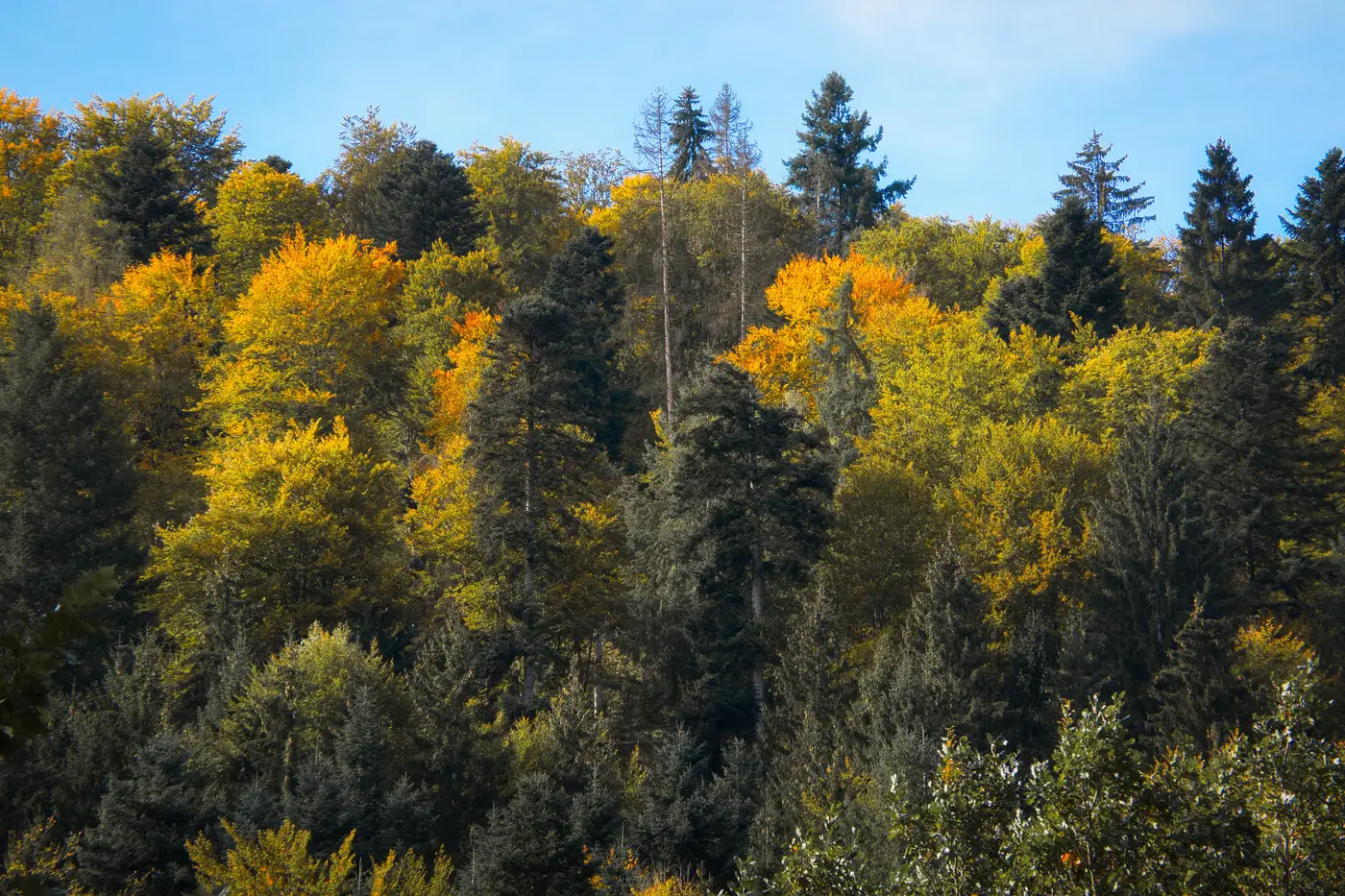
What had actually happened was unglamorous: the stand was seven years into a forty-year rotation, sitting right in the steepest part of the volume curve for that species mix and site index. Young stands don't add biomass in a straight line. They add almost nothing for a few years while root systems establish, then the canopy starts closing and the increment per acre climbs fast, and it keeps climbing until crown competition starts thinning the growth rate back down on its own. Nobody harvested a stick of wood. The trees just did what trees in that growth phase do, and the jump looked dramatic next to a reporting cycle or two of modest numbers before it.
There was a second piece, smaller but worth writing down because it's the kind of thing that trips people up later. Part of the stand had come through a partial blowdown two cycles earlier, enough crown loss that the canopy signal in that patch had dipped without any salvage operation attached to it. By this cycle that patch had filled back in. Some of the increase was ordinary growth and some of it was a patch recovering from an event that never showed up as a harvest number, because it wasn't one. Two stories, one combined signal, and the reviewer had no way to tell them apart from the top-line figure alone.
What got the response letter written in an afternoon instead of a week was having a methodology note already on file instead of reconstructing one under deadline. We'd been running the same approach cycle over cycle: same spectral bands, same acquisition season, same regression against canopy structure. The acquisition dates and processing steps for both years were already documented and didn't need defending on their own. The number had somewhere to stand, which is exactly what a biomass layer built the same way every cycle is for.
The response I eventually sent laid out the growth curve, the stand age, the blowdown history, and the imagery dates for both cycles side by side. The reviewer accepted it without a follow-up question, which I took as a compliment given how the first email had read. A biomass number without its growth story attached invites someone to ask why it moved. That question is the registry doing its job, and the growth story is the thing you want sitting in a folder before the email lands. Keep it there, every cycle, before you need it.